Web design evolves constantly as technology, devices and expectations change. Following web design trends can make your site feel current — but only when trends support usability and your brand. Here are directions we expect to shape websites in 2027, and how to apply them sensibly.
1. Expressive, oversized typography
Large, confident headlines with carefully tuned spacing make strong first impressions. Editorial layouts — inspired by magazines — use typography as the main visual element.
Use it wisely: maintain readability on mobile and keep body text comfortable.
2. Purposeful motion
Scroll-triggered reveals, subtle parallax and micro-interactions guide attention and make sites feel alive.
Use it wisely: keep animations smooth and meaningful, and respect visitors who prefer reduced motion.
3. Bento-style layouts
Grids of cards in varying sizes — inspired by bento boxes — organize services, features and stats into digestible, visually interesting blocks.
Use it wisely: ensure cards stack logically on mobile.
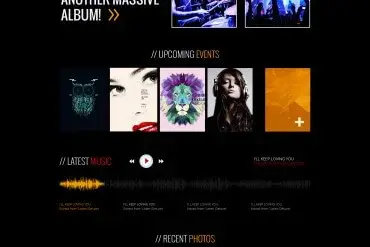
4. Dark, cinematic aesthetics
Dark backgrounds with glowing gradients and dramatic lighting create premium, immersive experiences, especially for creative and technology brands.
Use it wisely: maintain strong text contrast and test readability.
5. Performance-first design
Fast loading is non-negotiable. Designers are choosing lighter assets, modern image formats and efficient code from the start.
Use it wisely: treat speed as a design requirement, not a final optimization.
6. Accessibility as standard
Inclusive design — sufficient contrast, keyboard navigation, clear focus states, descriptive alt text — is increasingly expected.
Use it wisely: build it in from the beginning rather than retrofitting.
7. Authentic imagery
Visitors respond to real photos of teams, products and work rather than generic stock. When stock imagery is used, it should be carefully chosen and clearly supportive rather than misleading.
8. Conversational interfaces and AI-assisted search
Chat interfaces and smarter on-site search help visitors find answers faster. Search engines are also changing how they present information — see our guide to SEO for small businesses.
9. Personalized experiences
Content that adapts to returning visitors, location or interests makes sites feel more relevant.
Use it wisely: respect privacy and keep personalization helpful rather than intrusive.
10. Sustainable web design
Lighter pages use less energy and data. Efficient design benefits users, search visibility and the environment.
Trends vs. fundamentals
| Fundamental | Why it never goes out of style |
|---|---|
| Clear value proposition | Visitors decide quickly |
| Easy navigation | People need to find things |
| Fast performance | Nobody likes waiting |
| Mobile usability | Many visits are on phones |
| Trust signals | Credibility drives action |
Apply trends on top of these fundamentals, not instead of them. Our website design guide covers the essentials.
Should you redesign for trends?
Redesign when your site no longer serves your goals, brand or users — not just because styles change. Often, targeted improvements to content, speed and calls to action deliver more value than a complete redesign.
How to apply trends without dating your site
Trends are tools, not rules. Before adopting one, ask three questions. Does it make the website clearer or more useful for customers? Does it suit your brand personality and audience? Can it be implemented without hurting speed or accessibility? Oversized typography, for example, can make a bold agency feel confident but may overwhelm a calm healthcare brand. Motion can guide attention beautifully — or distract and slow pages if overused.
A practical approach is to keep foundations timeless — clear navigation, readable typography, fast performance, accessible color — and express trends in elements that are easy to update later, such as imagery, illustration styles, section layouts and micro-interactions.
A worked example
A creative studio wanted its website to feel current. Rather than rebuilding everything around every trend, it chose three that fit its brand: a dark, cinematic palette to showcase portfolio work, bento-style layouts for its services and subtle scroll-driven motion that respected reduced-motion preferences. It kept navigation simple, images optimized and contrast accessible. The site felt contemporary without sacrificing usability or speed.
Key takeaways
- Adopt trends that serve your audience and brand, not every trend.
- Performance and accessibility should never be traded for style.
- Keep foundations timeless and express trends in flexible elements.
- Review your site periodically rather than chasing every new idea.
Modern design, built to perform
We design websites with contemporary aesthetics, purposeful animation and strong performance. Explore our website design services and web portfolio.
Frequently asked questions
Should my website follow the latest trends?
Use trends that support your goals and brand. Usability, speed and clarity always come first.
How often should I redesign my website?
Many businesses refresh every few years, but continuous improvements to content and performance are more valuable than frequent full redesigns.
Do animations slow websites down?
Heavy animations can. Well-built motion using efficient techniques and respecting reduced-motion preferences can add polish without hurting performance.
World Website Designs
Need help with web design?
Award-winning designers, unlimited revisions and 100% ownership rights — with 24/7 support.